
Mission and Aransas Rivers
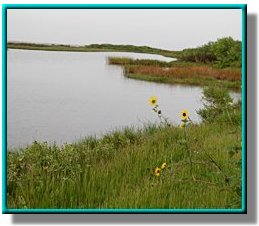


Watershed Counties: Aransas, Bee, Goliad, Karnes, Refugio, and San Patricio
Parameter: Bacteria
Basin: San Antonio-Nueces Coastal
Segments: 2001, 2003, 2004, 2004B
On this page:
- Background and Goals
- Watershed Description
- Get Involved
- Approved I-Plan
- Adopted TMDLs
- Project History
- Reports
- Contact the TMDL Program
Background and Goals
High concentrations of bacteria are often found in the tidal portions of the Mission and Aransas Rivers. High concentrations of bacteria may indicate a health risk to people who swim or wade in the rivers—activities called “contact recreation” in the state’s standards for water quality. Bacteria are commonly found in the intestines of warm-blooded organisms such as humans, livestock, cats, and dogs. These bacteria in water may indicate the presence of disease-causing microorganisms.
In response to these conditions, TCEQ adopted TMDLs for indicator bacteria in these tidal rivers and funded the development of an I-Plan to improve water quality in them.
A TMDL determines the amount (or load) of a pollutant that a body of water can receive and still support its designated uses. The allowable load is allocated among source categories within the watershed, and stakeholders work with the state to develop an I-Plan with measures that reduce pollutant loads. Stakeholders are also developing a watershed protection plan in the watershed (WPP).
The goal of the project is to reduce bacteria levels to protect people who swim or wade in the rivers.
Watershed Description
The Mission River Tidal (Segment 2001) and the Aransas River Tidal (Segment 2003) lie within the San Antonio–Nueces Coastal Basin on the lower Texas coast. The combined watersheds drain about 2,600 square miles of coastal plain between the San Antonio and Nueces Rivers. The project watershed includes portions of Aransas, Refugio, San Patricio, Bee, Goliad, Live Oak, and Karnes counties. Cities in the watershed include Refugio, Sinton, Taft, Beeville, and Bayside.
The lower Texas coast is home to diverse flora and fauna. Fish, shrimp, crab, and oysters are sought after by both commercial fisherman and recreational anglers. Water quality plays a vital role in the health, economy, and productivity of this area.
Get Involved
The Texas Water Resources Institute (TWRI) coordinated stakeholder participation in development of the TMDLs and I-Plan. Project staff informs the public about this project through a series of public meetings. The meetings are open to everyone.
In all its projects, the TCEQ seeks to gather opinion and information from people who represent government, permitted facilities, agriculture, business, environmental, and community and private interests in the watershed. TWRI coordinates public participation in monitoring progress of activities to improve water quality in the watershed.
Educational Resources
See the Texas Water Resources Institute website for the Copano Bay Water Quality Education Project , which provided information about educational programs and demonstrations for land and livestock owners. These programs and demonstrations were designed to increase awareness of water quality issues and best management practices for reducing bacteria in stormwater runoff.
Approved I-Plan
The commission approved the stakeholders' I-Plan on May 25, 2016.
- I-Plan for Two Total Maximum Daily Loads for Indicator Bacteria in the Tidal Segments of the Mission and Aransas Rivers
- Response to Comments on the I-Plan
Status of Activities
The TWRI watershed coordinator and stakeholders meet annually to evaluate the progress of their I-Plan and WPP. The I-Plan sets forth nine voluntary management measures and two regulatory control actions. Tracking of implementation progress allows stakeholders to evaluate actions taken, identify actions that may not be working, and make any changes as necessary.
- 2024 Implementation Status Update
- 2023 Implementation Status Update
- 2022 Implementation Status Update
- 2021 Implementation Status Update
- 2020 Implementation Status Update
- 2019 Implementation Update
- 2018 Implementation Update
Adopted TMDL
The commission adopted these TMDLs on May 25, 2016.
-
Two TMDLs for Indicator Bacteria in the Tidal Segments of the Mission and Aransas Rivers
Segments: 2001 and 2003; Assessment Units: 2001_01 and 2003_01 - Response to Comments on the TMDLs
On Aug. 9, 2016, EPA approved the TMDLs, at which time they became part of the state’s Water Quality Management Plan. Learn more about the Water Quality Management Plan.
Revisions to the TMDLs
From time to time, it is necessary to revise TMDLs to account for changing conditions in the watershed. Revisions to the load allocations in TMDLs are made via the state’s Water Quality Management Plan (WQMP), which is updated quarterly. The WQMP provides projected effluent limits for use in planning and permitting activities under the Texas Pollutant Discharge Elimination System (TPDES). The TCEQ reviews all applications for new and amended permits for conformance with applicable portions of the WQMP, including adopted TMDLs.
Revisions are made to TMDLs in one of two ways:
- Updates are made to account for changing conditions in the watershed, such as new or revised wasteload allocations, permits that have been canceled or have expired, or changed facility names.
- Addenda are created to add load allocations for assessment units that are impaired by the same pollutant or condition, within the same watershed as in the original TMDL report.
Addenda
Additional TMDLs have been added for the watershed by addendum:
-
Addendum One: Two TMDLs for Bacteria in the Aransas River Above Tidal and Poesta Creek
Segments: 2004 and 2004B; Assessment Units: 2004_02 and 2004B_02
October 2017 WQMP Update. Approved by EPA Feb. 8, 2018. -
Addendum Two: One TMDL for Bacteria in Poesta Creek
Segments: 2004B; Assessment Units: 2004B_01
January 2024 WQMP Update. Approved by EPA April 17, 2024.
Updates
- July 2023, Appendix IV, pages 23-24
- April 2022, Appendix V, pages 30-31
- April 2021, Appendix V, pages 21-22
- July 2020, Appendix I, page 12
WQMP updates may be viewed in person at the TCEQ Library, Building A, 12100 Park 35 Circle, Austin, Texas. Electronic versions of updates published from 2014 through 2020 are available on the Texas State Library and Archives Commission website .
Project History
The state and its partners collected and analyzed extensive amounts of data about the project watersheds from 2004 through 2010. While the TCEQ, the Texas State Soil and Water Conservation Board (TSSWCB), and stakeholders in the watershed evaluated the most appropriate strategy for reducing bacteria concentrations, agricultural producers voluntarily participated in educational activities aimed at better understanding the water quality issues and various methods for reducing the amount of bacteria that can wash off agricultural property and into waterways. In 2011, stakeholders and the state agencies decided to develop TMDLs and an implementation plan for the tidal portions of the Mission and Aransas Rivers in the Copano Bay watershed.
Copano Bay, which is identified as having an impaired oyster waters use, was considered in the assessment stage of this project. Designation of the oyster waters impairment is based on a risk assessment by the Department of State Health Services (DSHS). These risk assessments are not based on concentrations of bacteria in the water; rather, they are based on certain risk factors such as the likelihood of high rainfall and runoff or the influx of sewage from failing or inefficient domestic treatment systems.
Actual concentrations of bacteria in the waters of the bay are within acceptable levels. Consequently, development of a bacteria TMDL for Copano Bay is not necessary, and would not be effective in reducing the risk assessed by the DSHS.
Reports
- Technical Support Document, Aransas River and Poesta Creek
- Technical Support Document, Mission and Aransas Rivers
- Bacteria Source Tracking in Copano Bay: Phase II Final Report
Contact the TMDL Program
Please email tmdl@tceq.texas.gov, and mention the Mission and Aransas Rivers project in the subject. Or call us at 512-239-6682.
 Back to top